

A brief-ing: Agnostic Problem-Solving
What it means to re-examine a brief for Bone Marrow donation when you find nuggets in research.

Hey there,
It’s been a while since we last spoke, but brief. is now a team of three
(hello from Alistair, Eng Geng, and Clarissa)!
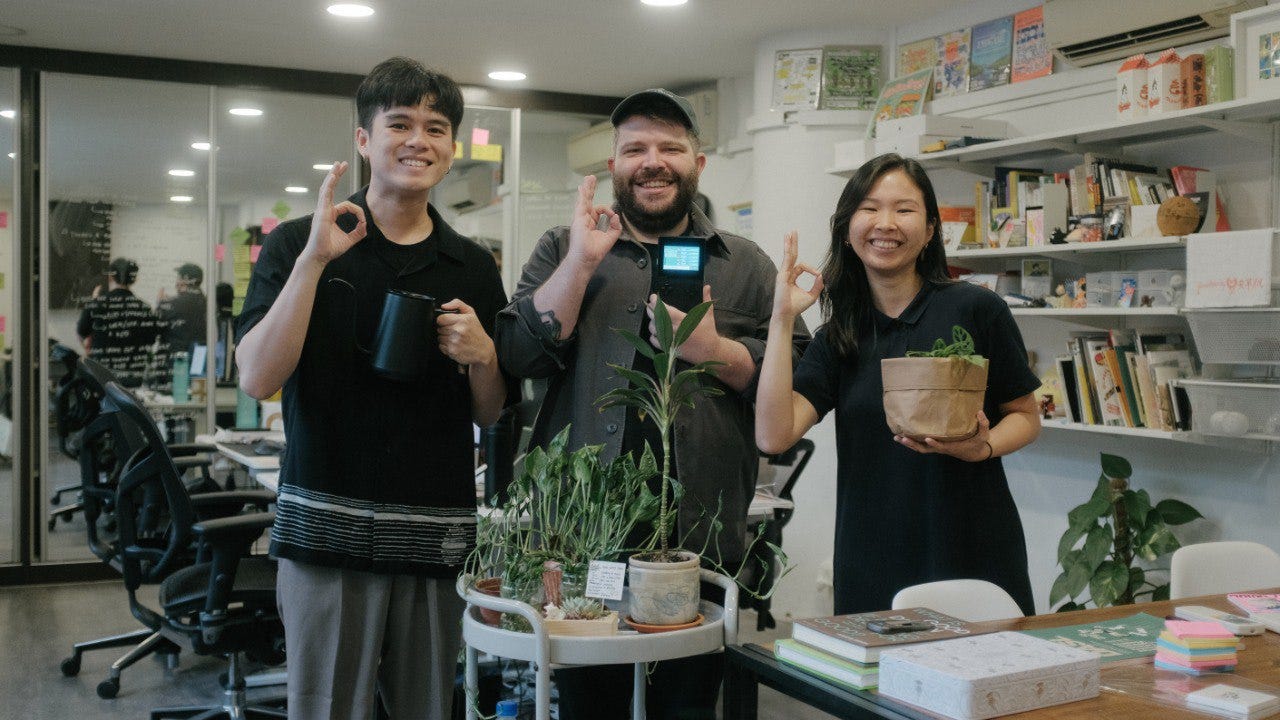
We wanted to start off 2024 by sharing with everyone a recent case study that we decided to take on last year—an open innovation challenge on IMDA’s PIXEL platform, initiated by the Bone Marrow Donor Programme (BMDP) in collaboration with the National Council of Social Services (NCSS).
The challenge was to come up with a digital-first, mobile-friendly experience to streamline BMDP’s donor registration and verification process. All of content provided seemed to have a strong desire in improving BMDP’s data analysis and segmentation of donors to help them better target and gain more swabs and donations.
Quick spoiler, we went through a detour and designed something completely different—here’s why.
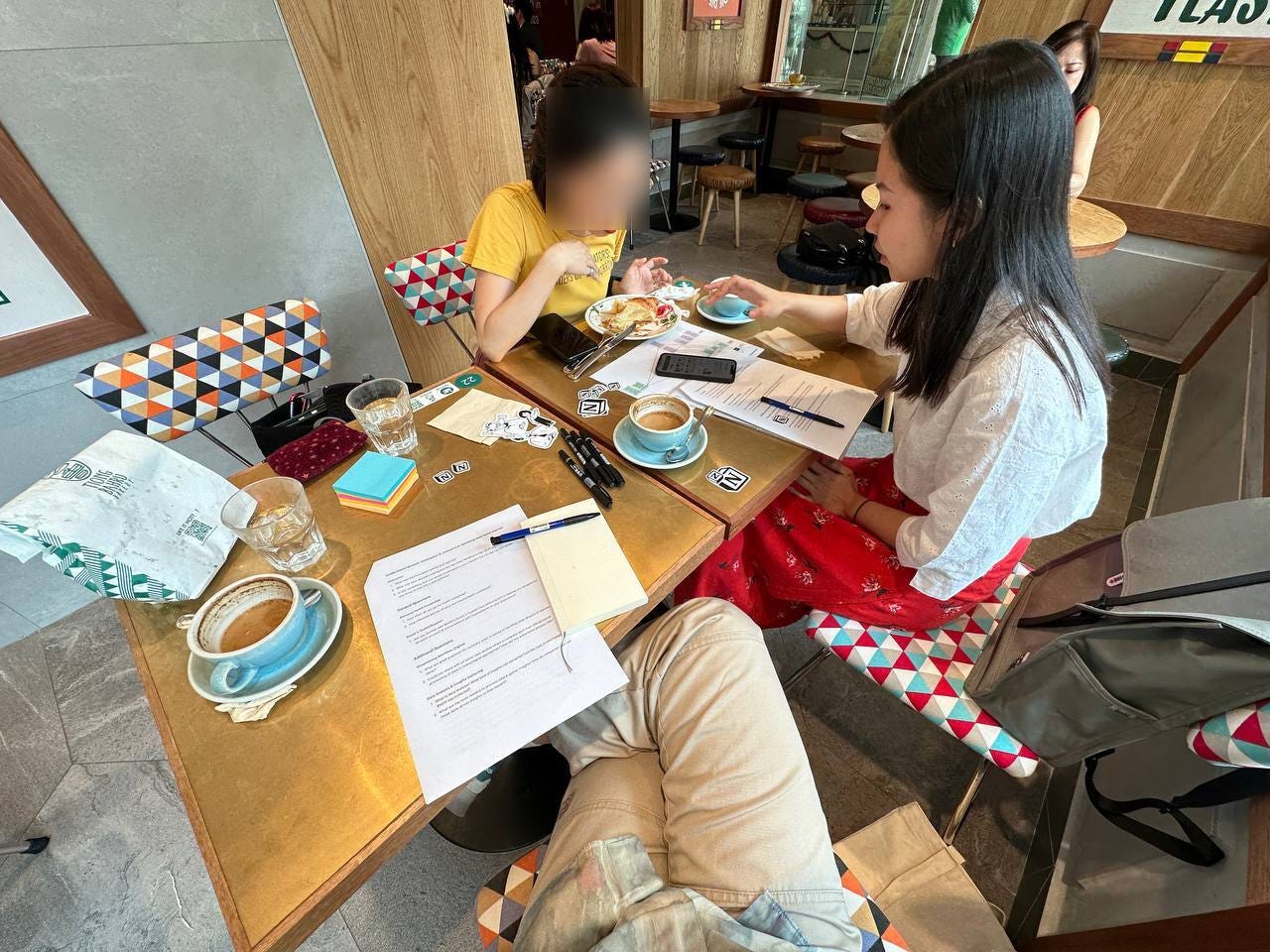
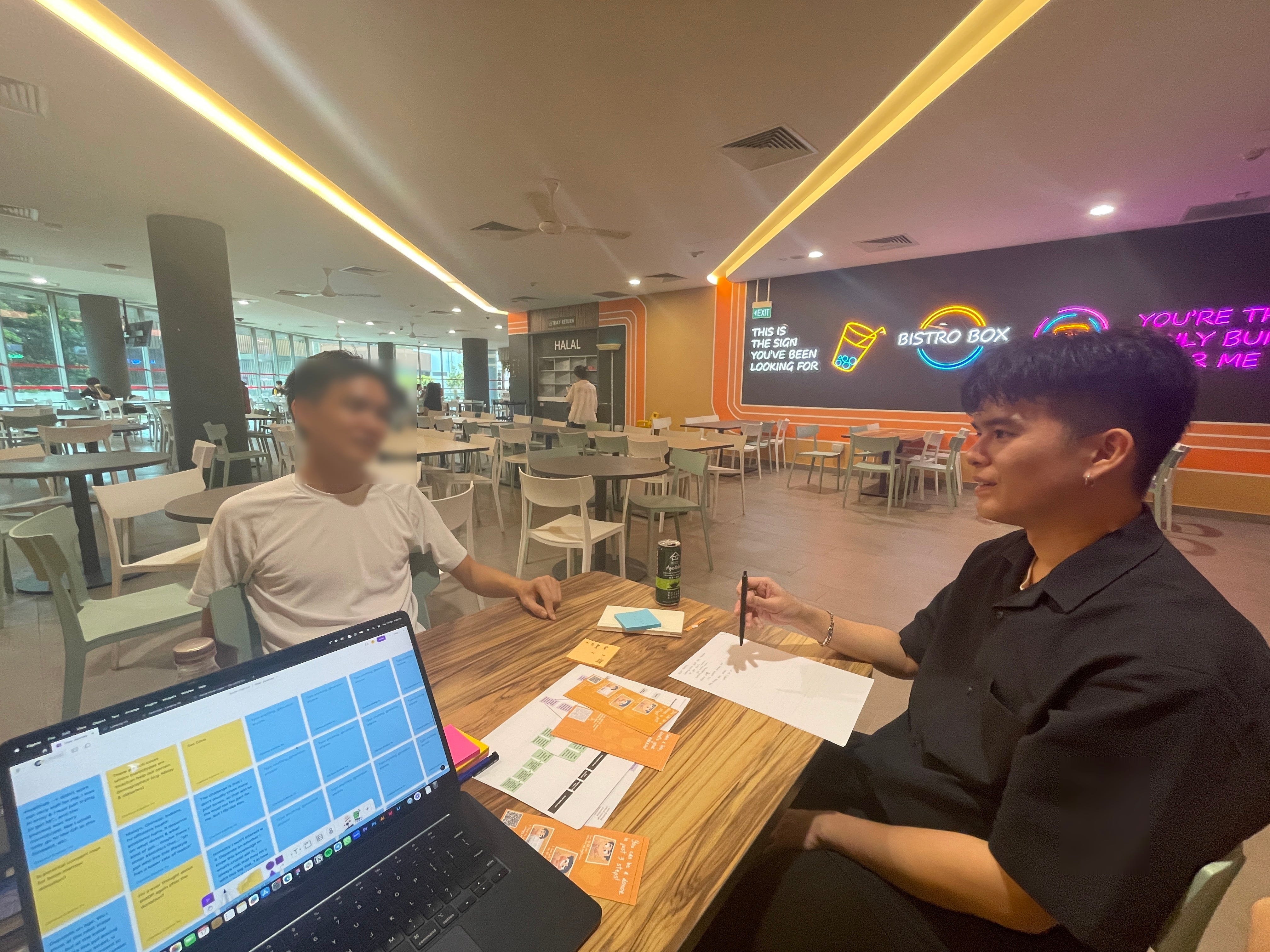
Like how all design projects begin, the first thing we did was roll up our sleeves and dive into the nitty-gritty, digging through BMDP’s current sign-up process, followed by a series of in-depth interviews with several individuals who are already on the donor’s registry.
We even signed up for the registry ourselves! These efforts enabled us to gain a better understanding of donors’ perceptions and experiences regarding the sign-up process.
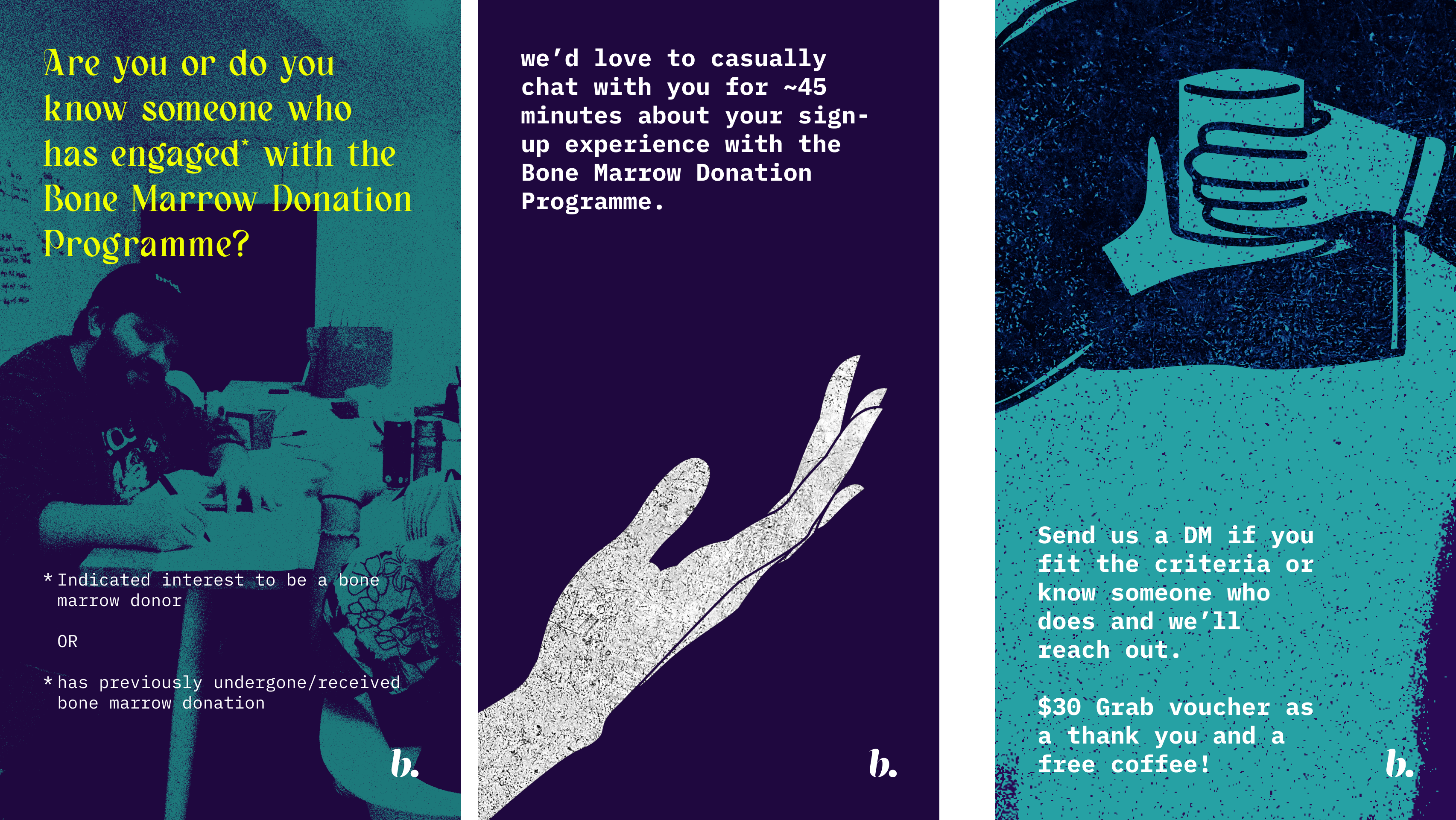
The stories that we heard from BMDP’s current donors were fascinating.
Here are some snippets of what was shared with us:
“The donor decision was a decision made over a 20 years period. I knew someone who needed bone marrow transplant, then learned about BMDP from school, and finally I saw an instagram post of an influencer who needed donor.”
It took one of our interviewees 20 years of pondering before pulling the trigger and signing up. She was finally convinced to join the cause after a touching story of a patient was shared around on social media.
"Bone marrow donation is different from blood donation, there is no clear reward. There isn’t something to show, like a badge of honour. The helping process is not as satisfying"
While another interviewee, who was a BDMP advocate, emphasised the emotional aspect of decision-making and suggested simplifying the process to increase participation.
"if my friends do then I also do la … So it’s about whether they do it & it’s fine. If it's fine, I won’t raise any questions. If my friends raise any questions, then I would do the same."
Another interviewee in his early 20s highlighted how the importance of messaging and peer influence was a big part of his decision-making
From our conversations with this lovely range of humans, we uncovered some insights and identified some opportunities:
Opportunity to link donors to recipients better
Opportunity to make the sign-up process more rewarding, regardless of whether potential donors end up donating or not
Opportunity to craft better public education around bone marrow donation
…and many more.
Part of the process for us is rapidly crafting sacrificial concepts meant to elicit response and reactions from our interviewees.
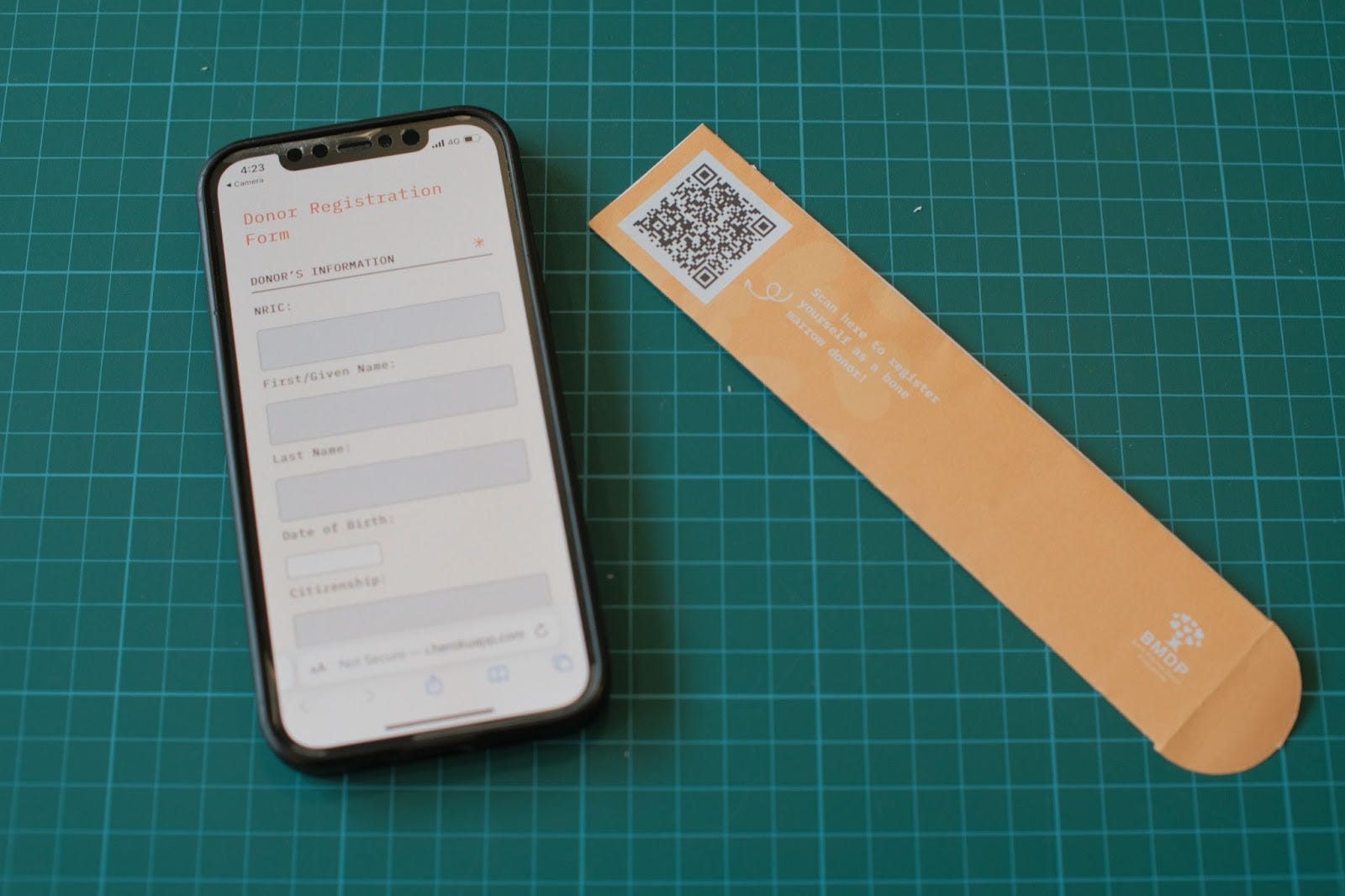
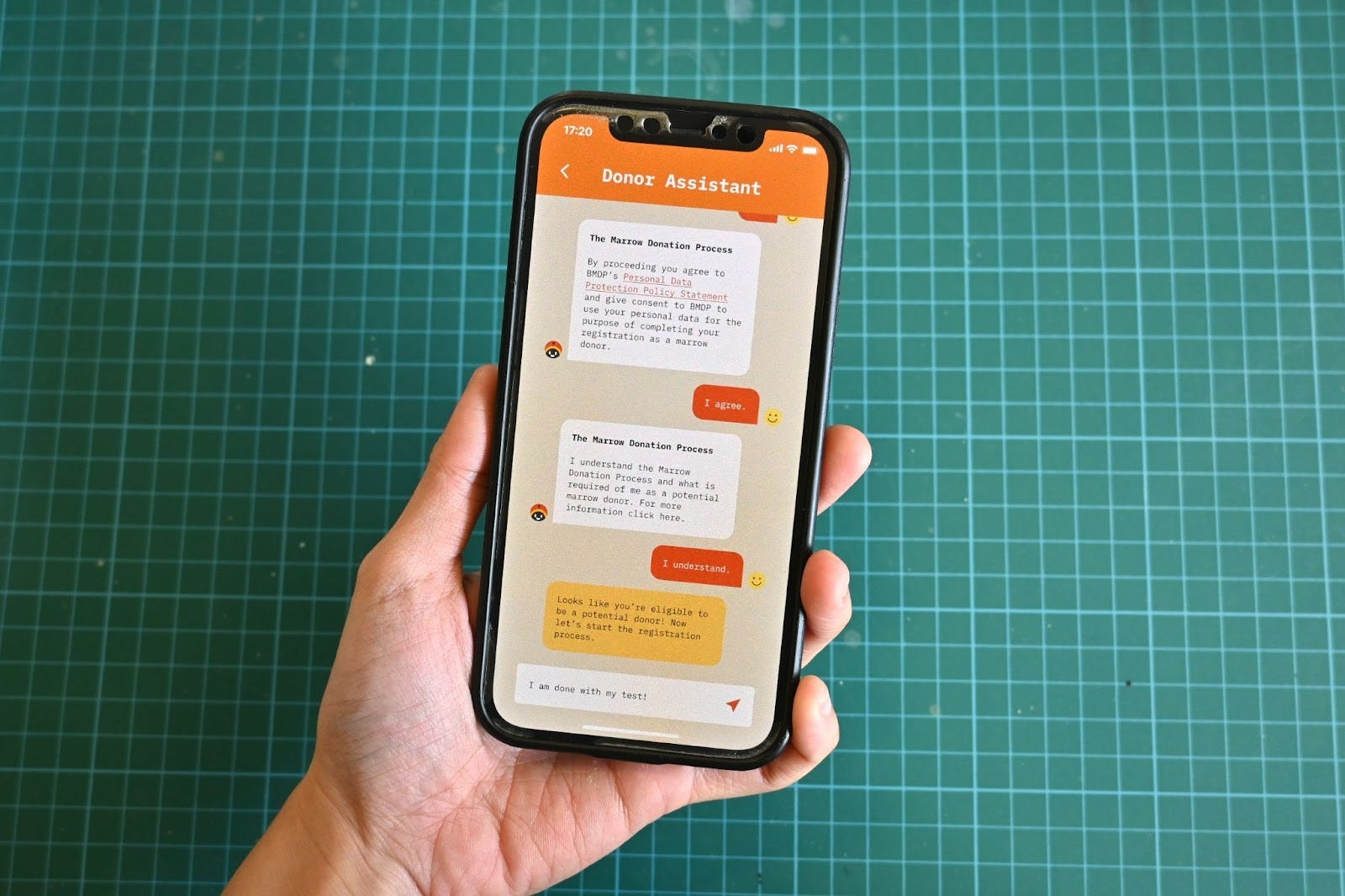
So yes…we know that the open challenge’s objective was a digital rework that streamlines the registration process (still an important task!). We started to build out a set of working prototypes that focused on bridging physical and digital touch-points to improve data capture and reduce drop-off.
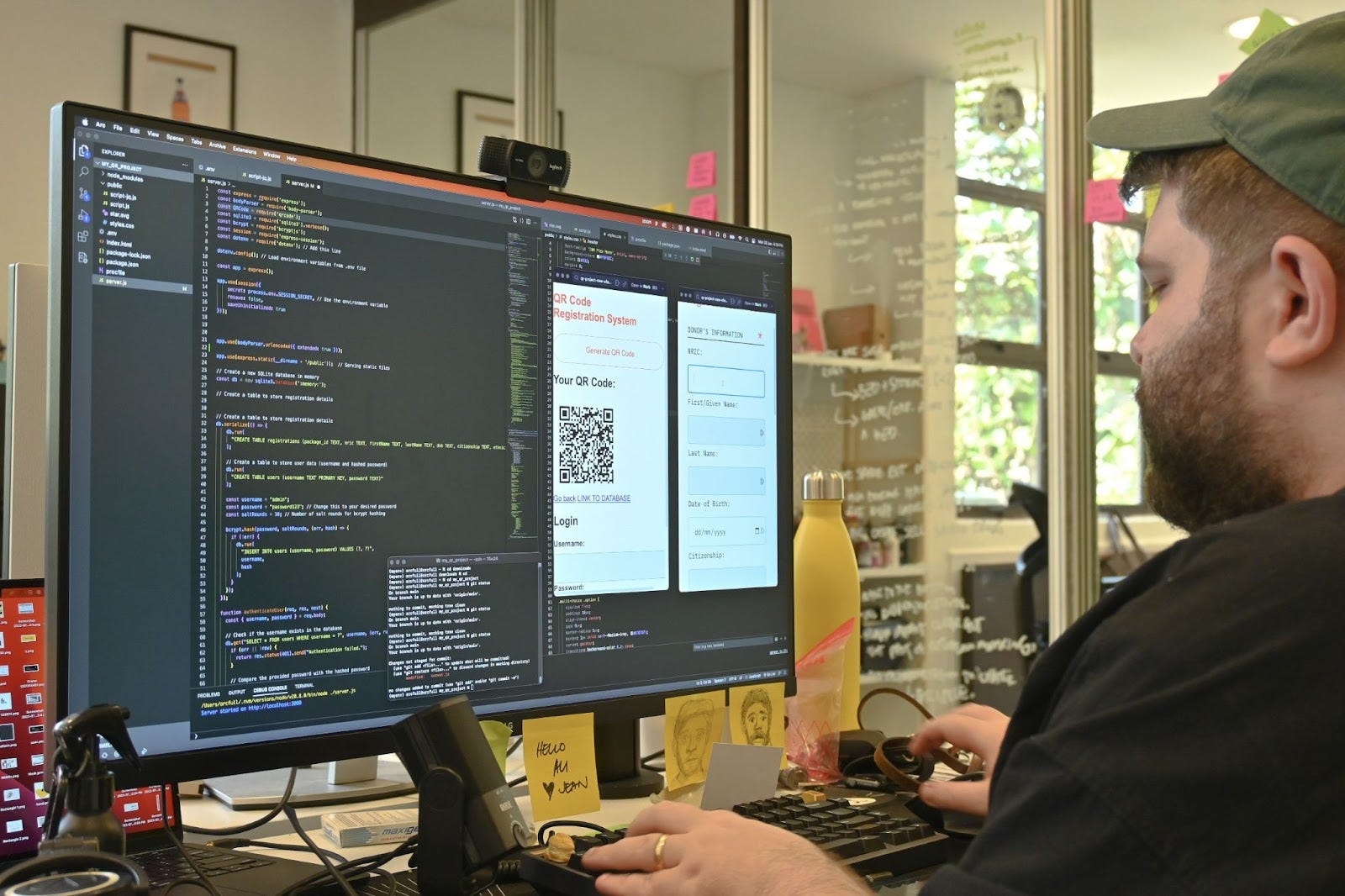
However, staying true to our outcome-agnostic methodology, our interviews led us to an equally interesting gem: to design a donor-facing sign-up experience that could resonate with potential donors emotionally.
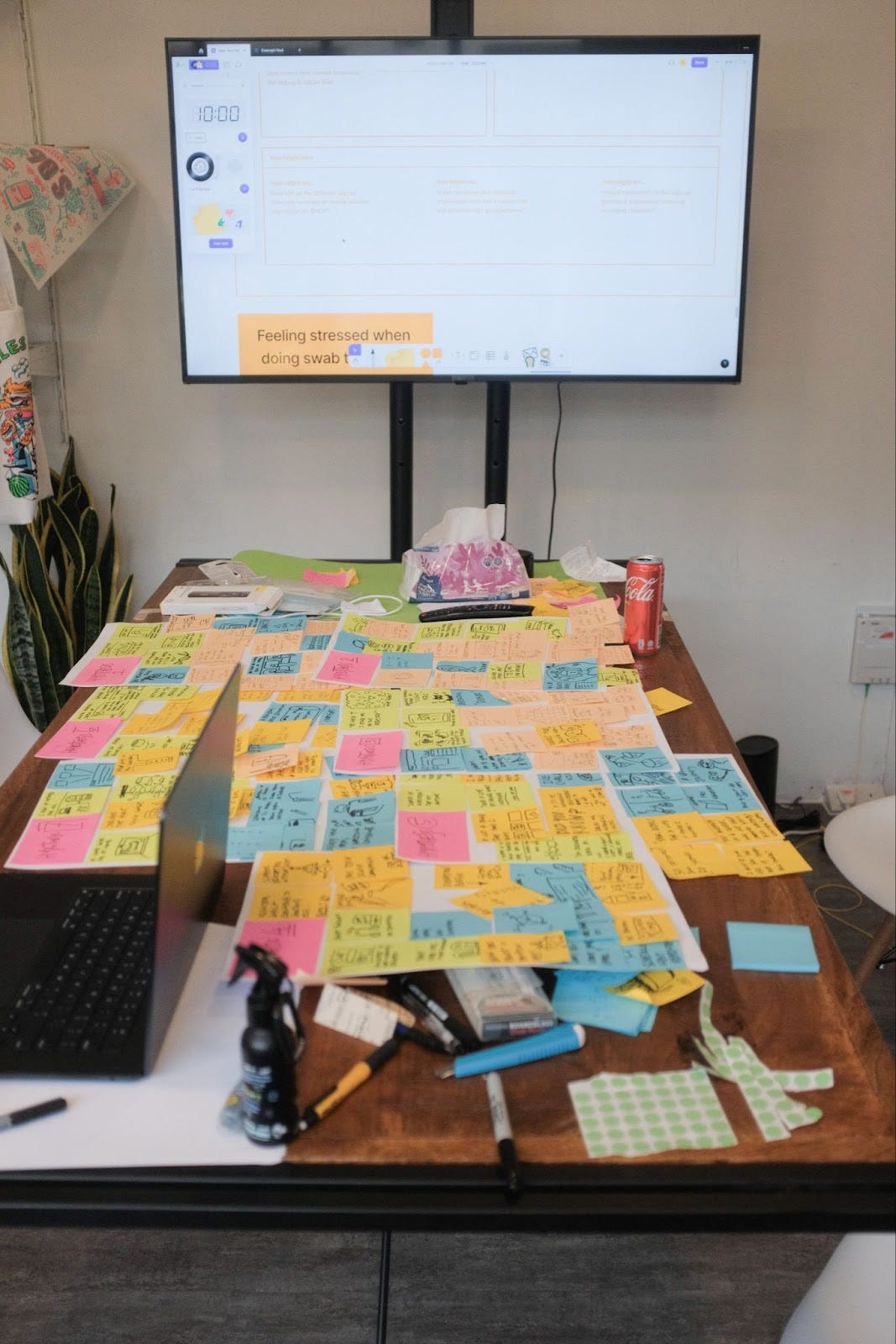
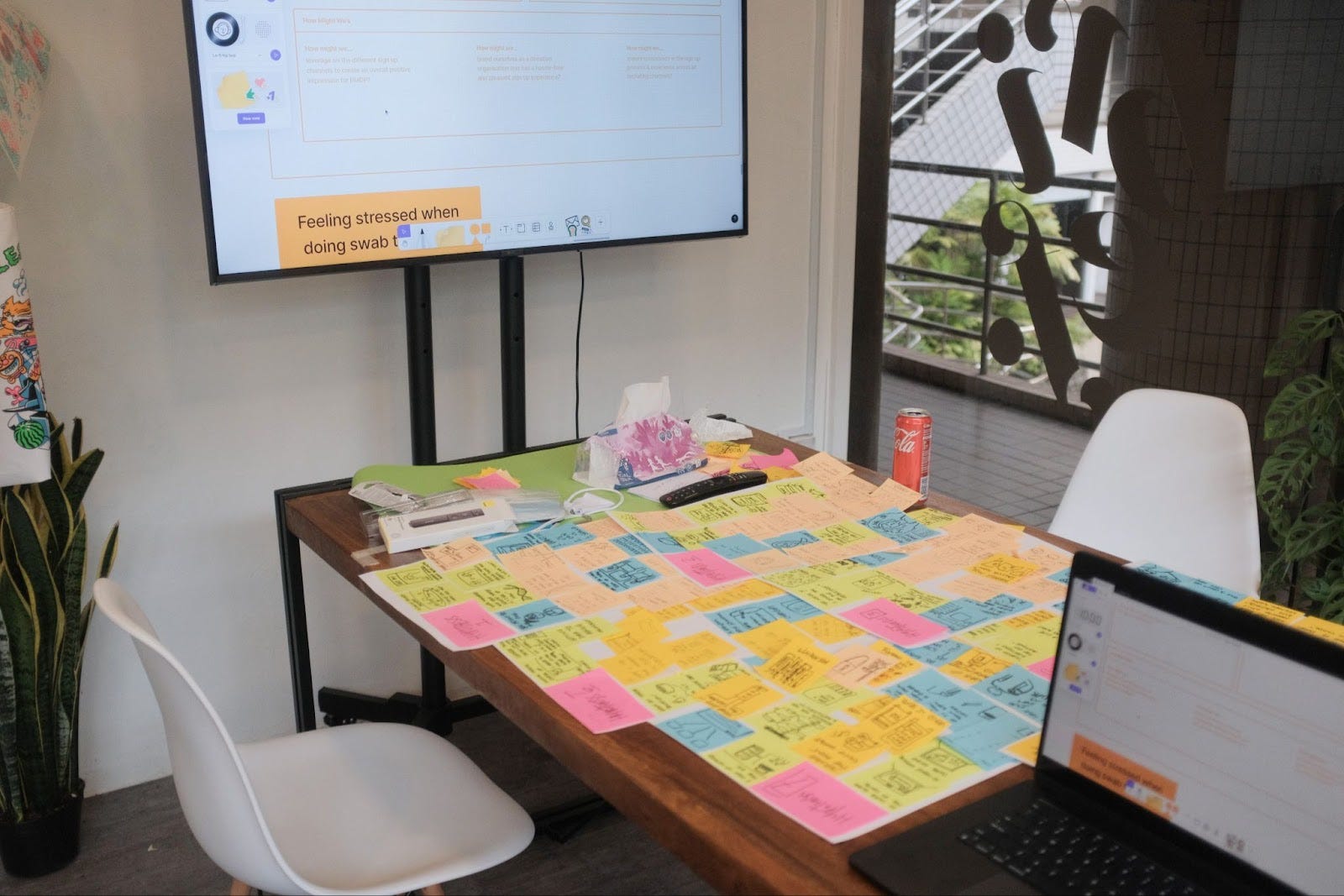
So instead of going deep into digital redesigns, we ended up churning out a few campaign & educational concepts that would captivate the masses. The goal went from redesigning an administration-based digital donor experience to weaving a compelling narrative that BMDP could share with potential donors, in an attempt to draw them in and get them to sign up in the first place.
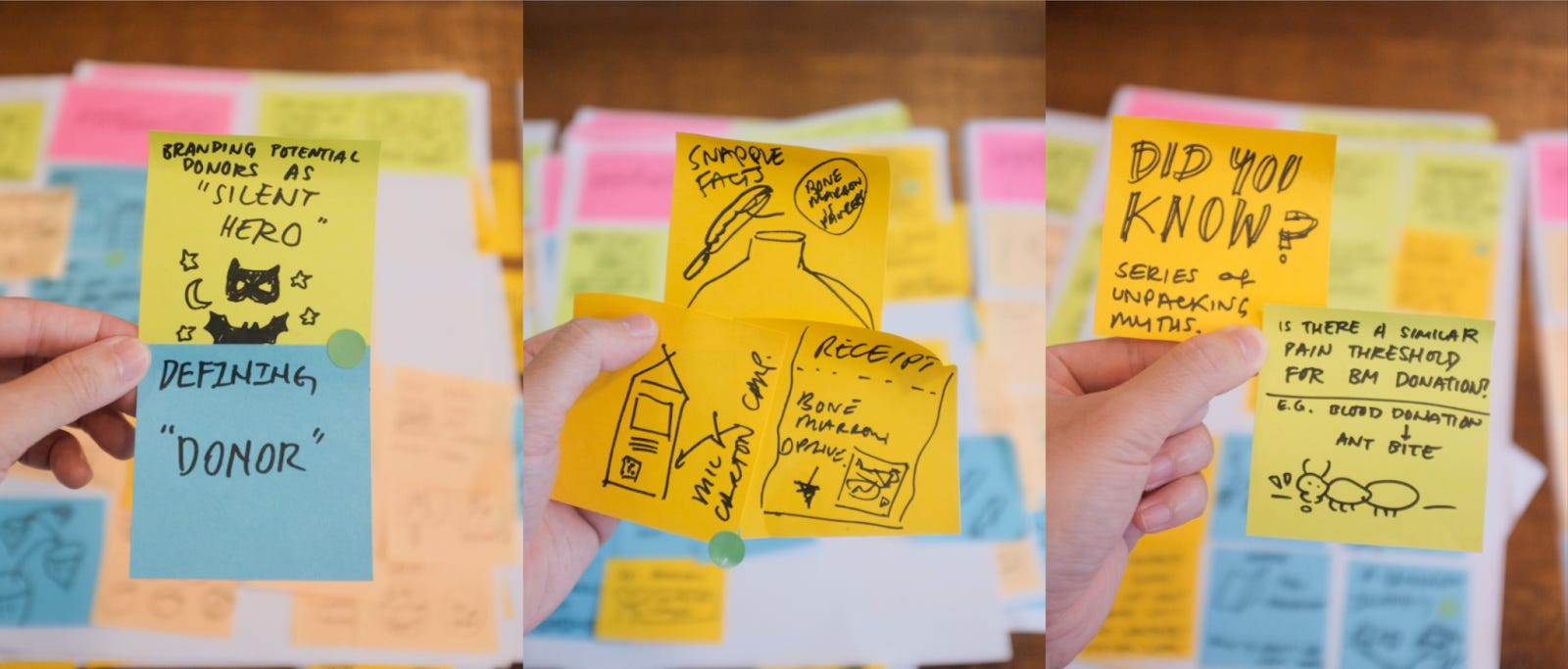
Rethinking what it means to be a donor:
How about transforming "potential donors" into 'soldiers' or 'silent heroes'? Let's make being a part of the registry feel like being a superhero in real life.
“Everyday” campaigns:
Imagine bumping into your potential marrow match on the train! We're talking about popping prompts on receipts or drink packs, making signing up a part of everyday life.
Using familiar ‘metrics’ for public education:
Let's correct misconceptions about donating marrow by using everyday comparisons. A great example of this could be the common comparison of needle injections to ant bites, or visualising the recovery duration post bone marrow donation by drawing parallels to similarly comparable events.
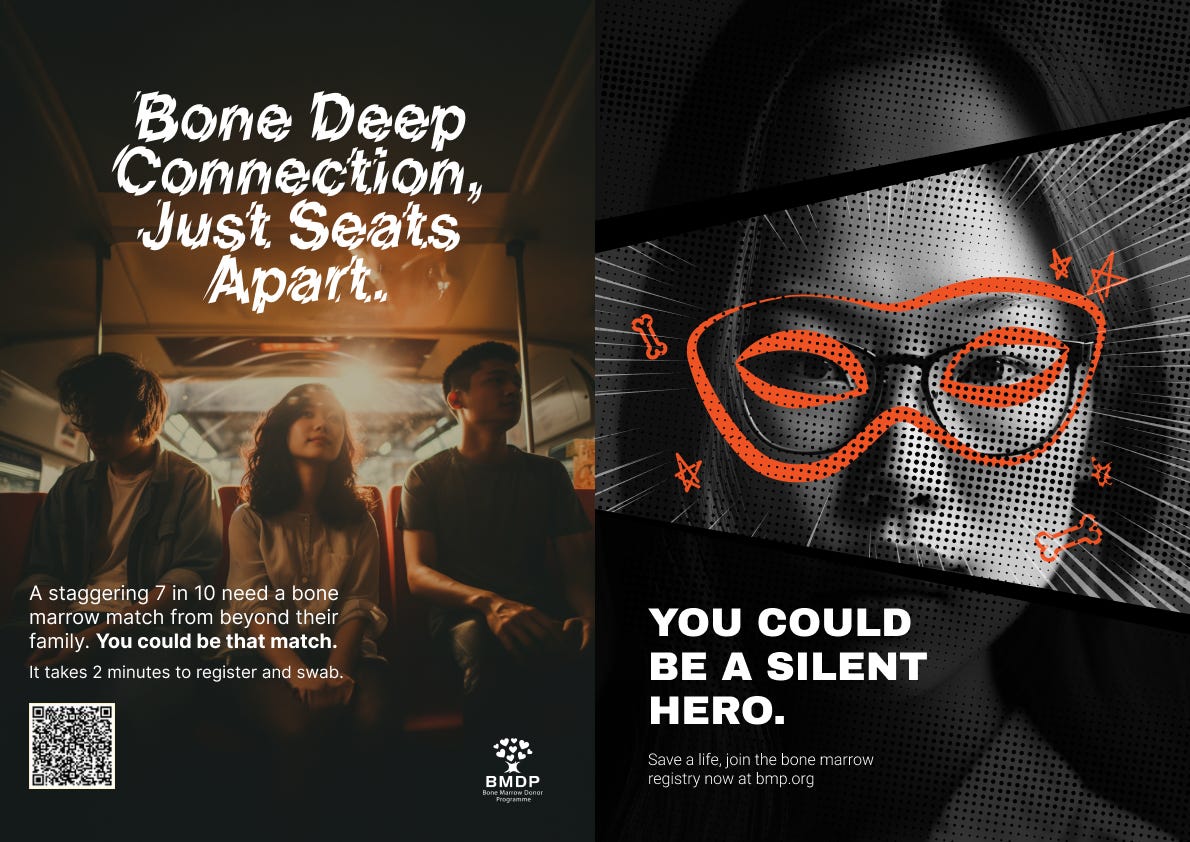
Wrapping up this brief (pun intended) case study, we wanted to highlight the importance of remaining outcome-agnostic and letting research illuminate the way forward when doing a human-centred design project. Although many people start with a specific outcome in mind, often times the more important things to tackle come up when you start researching and meeting real users.
If this approach resonated with you and you want to bring these sort of skills to your team/organisation, let’s grab a coffee & have a chat!
Love the brief team.
ali@keepitbrief.co
+65 88665229